
.png)














Comprehensive Fall Prevention for Senior Care: Integrating Compliant Wheelchairs with Systematic Protocols

The Invisible Crisis in Senior Care: The Cost of a Single Fall
I. The "Liability Anxiety": Is Your Facility One Step Away from a Lawsuit?
For administrators of nursing homes and rehabilitation centers, a single fall isn't just a clinical incident—it's a massive legal and financial risk. Statistics show that roughly half of all nursing home residents fall annually, with a significant percentage occurring during wheelchair transfers or due to equipment failure.
The anxiety for institutional buyers is real:
-
Regulatory Scrutiny: Are your current mobility devices up to international standards like CE or ISO13485?
-
Staff Burnout: Are your caregivers struggling with heavy, outdated wheelchairs that increase the risk of workplace injuries?
-
Reputation Loss: A record of preventable falls can devastate a facility's occupancy rates and family trust.
The root cause often lies in the "Safety Gap"—the space between generic, low-cost equipment and the rigorous demands of institutional care.
II. Bridging the Gap: Integrating Equipment with Protocol
A successful fall prevention program requires a dual approach: Systematic Protocols and Compliant Hardware.
1. Systematic Care Protocols
Safety doesn't happen by accident. It requires a "Screen-Educate-Manage" workflow:
-
Risk Screening: Every resident should be assessed for balance and cognitive limits upon admission.
-
Transfer Training: Staff must be trained in the "Lock-before-Lift" rule, ensuring brakes are engaged before any movement.
-
Environment Audits: Constant monitoring for cluttered pathways and poor lighting.
2. The Hardware Solution: Engineering for Safety
Protocol alone isn't enough if the equipment fails. Modern institutional wheelchairs must include specific engineering safeguards to counteract human error:
-
Anti-Roll Protection: Rear anti-tippers are non-negotiable for residents who may lean back or navigate slight inclines.
-
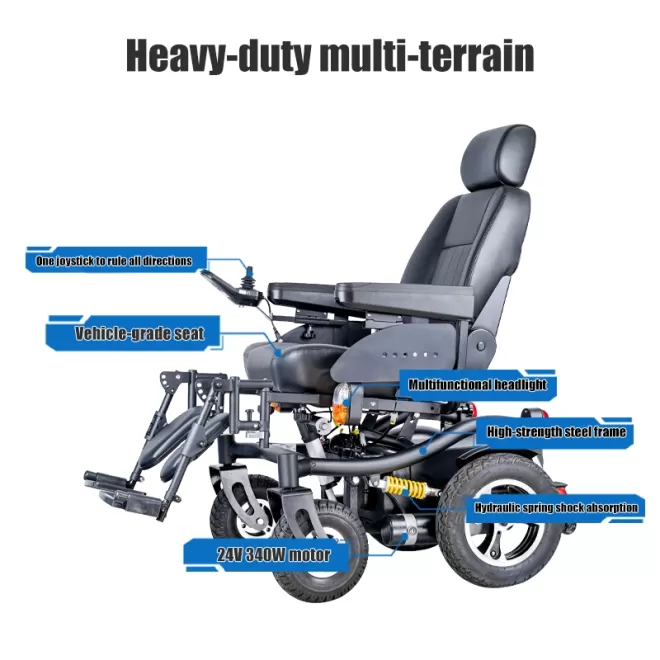
Enhanced Transfer Design: Features like openable armrests and swing-away footrests are critical. They allow for a "clear path" transfer, reducing the tripping hazards that cause most transfer-related falls.
-
Brake Reliability: Institutional use demands brakes that don't slip. High-performance alloys like 7003 aero-titanium provide the structural rigidity needed to keep braking systems aligned and effective over years of heavy use.
III. Why Sourcing Strategy is Your Best Defense
For distributors and procurement officers, the challenge is finding a manufacturer that understands these institutional pain points. This is where Suqian Excellent Science And Technology Co., Ltd. becomes a strategic asset.
Based in Suqian City, Jiangsu Province, Suqian Excellent has been a dedicated partner to the global healthcare trade since 2018. Their expertise in Mobility Scooters, Electric Stair Climbers, Patient Lifts, and Power Wheelchairs is built on a foundation of "Quality First."
How Suqian Excellent Solves Institutional Challenges:
-
Global Compliance: With CE, SGS, TUV, ISO13485, and Intertek certifications (and FDA testing underway), their products meet the rigorous safety requirements of the US, Europe, and Australia.
-
OEM/ODM Flexibility: Nursing homes often have unique layout requirements. Suqian Excellent’s professional R&D team can customize designs—from frame adjustments to specific safety features—to fit your facility's exact needs.
-
10-Year Export Expertise: Their sales team understands the high stakes of medical procurement. They don't just sell products; they provide the documentation and quality assurance that protect your business from liability.
-
Inventory Readiness: To help distributors respond to urgent institutional tenders, they maintain a large stock of models, ensuring even small quantity orders are delivered on time.
IV. Conclusion: Moving Toward a "Zero-Fall" Culture
The shift from "reactive care" to "proactive prevention" is the hallmark of a world-class senior living facility. By investing in high-performance, compliant mobility devices and integrating them into a rigorous nursing protocol, you aren't just buying equipment—you are buying peace of mind.
Stop settling for "good enough" wheelchairs that put your residents and your reputation at risk.



Building A, Software park,Shuyang City,Suqian,Jiangsu, China

