
.png)















Beyond the Stairs: How Electric Stair Climbers Are Redefining Access in Care


At a senior care residence in Berlin, a caregiver smoothly assists a resident down a narrow staircase for a morning physiotherapy session—a task that once required two staff members and considerable physical strain.
For administrators of multi-story care facilities, the daily challenge of moving individuals between floors represents more than an inconvenience; it's a significant operational and safety hurdle. The traditional method—manual carrying—is not only inefficient but also a leading cause of caregiver injury. In response, a practical piece of equipment, the electric stair climber, is seeing increased adoption, quietly transforming a high-risk chore into a routine, one-person operation.
This shift is driven by a clear need. With an aging global population and many care facilities housed in older buildings without elevators, the demand for safe vertical mobility solutions has never been greater. The electric stair climber, with its motor-driven track system, is emerging as a key tool, not as a flashy gadget, but as a reliable workhorse that protects both staff and residents.
01 The Invisible Burden: When Stairs Become a Barrier
In healthcare and senior living, stairs often create an unseen divide. For residents or patients with mobility challenges, a flight of stairs can mean the difference between attending a therapy session, joining a social meal, or remaining isolated in their room. For the institutions serving them, this translates into tangible operational costs.
The primary method for decades has been manual lifting and carrying. "It was our biggest liability," shares Michael, the operations director for a group of assisted living facilities in Ontario. "We had a good team, but the physical toll was real. We saw back strains, shoulder injuries, and the constant worry of a fall."
The numbers back this up. Studies in occupational health consistently show that healthcare workers have among the highest rates of musculoskeletal disorders, largely due to patient handling tasks. Beyond the human cost, this leads to increased sick days, higher insurance premiums, and potential worker compensation claims, creating a financial drain on care providers.
02 The Engineering Answer: Simplicity and Power
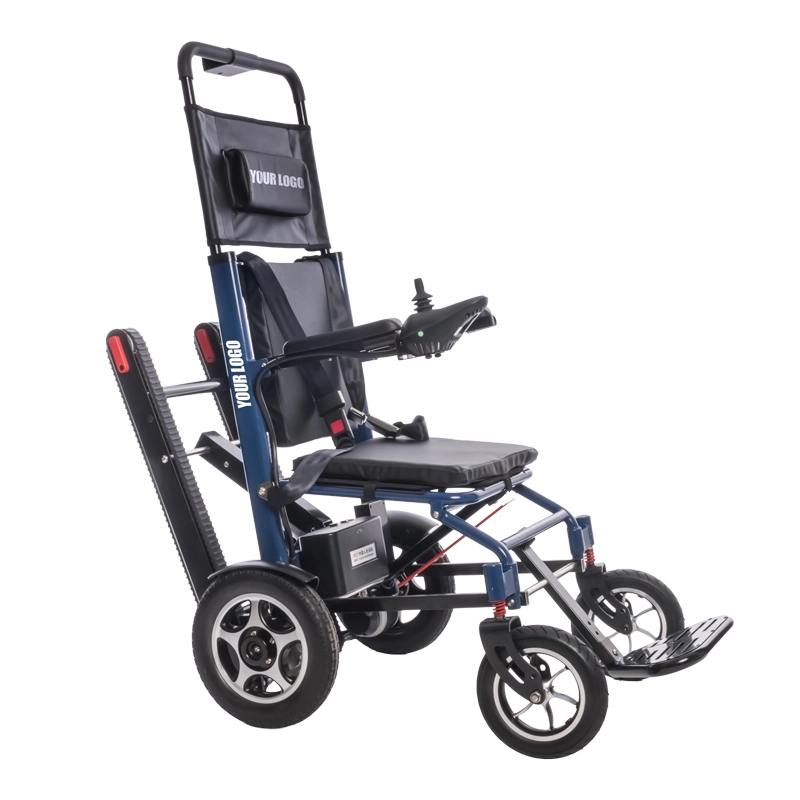
The modern electric stair climber addresses this problem with straightforward, robust engineering. At its core, a quiet electric motor powers a set of durable rubber tracks. These tracks grip the stair edges, allowing the device—with a resident securely seated—to ascend or descend at a controlled, steady pace.
The focus is on reliability and ease of use, not complexity. Operators, often caregivers with minimal technical training, can learn the basic controls in under 30 minutes. The interface typically consists of an intuitive handle with buttons for direction and speed. "The training was surprisingly brief," notes Sarah, a nurse in a UK rehabilitation center. "It's less about operating a machine and more about guiding it. Your focus stays on the person, not the controls."
This practical design is crucial for adoption. Facilities need equipment that works day in and day out, in all weather conditions (for entries/exits), and on various stair surfaces—from carpeted home stairs to concrete institutional steps.
03 The Tangible Impact: A Triple Win for Care Facilities
The introduction of a stair climber catalyzes positive change across three key areas: staff well-being, operational efficiency, and quality of care.
First, it drastically reduces physical strain on caregivers. By transferring the lifting force to the machine, the risk of acute injury and long-term wear-and-tear on staff is minimized. This is a powerful tool for staff retention and demonstrates a commitment to employee safety.
Second, it optimizes workforce deployment. A task that previously required two staff members for 15-20 minutes can now be accomplished safely by one in half the time. This frees up valuable caregiver hours for direct patient interaction and other critical duties, improving overall facility throughput.
Third, it enhances the dignity and comfort of the resident. A smooth, powered ride is inherently less stressful and more dignified than being manually carried. It can also encourage residents to participate more in community activities, knowing that the journey downstairs is no longer a formidable obstacle. "It's changed the weekly routine for several of our residents," Michael observes. "They're more willing to go to the garden or the common room, which has a noticeable effect on their mood."
04 Making the Right Choice: Key Considerations for Facilities
For a facility manager considering this investment, the evaluation should be pragmatic. Safety features are non-negotiable: look for fail-safe braking systems, secure locking mechanisms, and stable, comfortable seating with restraints.
Compatibility with the environment is critical. Measure your narrowest stairwell, check the turning radius, and ensure the device's weight and size are manageable for your staff in tight spaces. Battery life and charging logistics must support daily use without interruption.
Finally, consider the total cost of ownership. While the upfront investment is a factor, weigh it against the potential reduction in injury-related costs, insurance savings, and gains in staff efficiency. A reliable machine with accessible service and parts is often more valuable than a cheaper, less supported model.
05 The Future: Integrated, Smarter Mobility
The evolution of this equipment points toward greater integration. Future models may feature connectivity to facility management systems, allowing for usage tracking, maintenance alerts, and even integration with electronic health records to log patient movements.
The broader vision is of a seamless mobility ecosystem within care settings. The stair climber becomes one node in a network that includes wheelchair-accessible vehicles, interior transfer systems, and smart building design, all working together to eliminate mobility barriers entirely.
The story of the electric stair climber is not one of disruptive, headline-grabbing technology. It is a story of practical problem-solving. It represents a quiet acknowledgment that the well-being of caregivers is fundamental to the quality of care, and that the freedom of movement is essential for a dignified life.
By turning a strenuous, risky task into a manageable, routine one, this tool does more than move people up and down stairs—it helps lift the operational and human burden on the entire care ecosystem, one step at a time.



Building A, Software park,Shuyang City,Suqian,Jiangsu, China

