
.png)
















- 🧮 Key factors that influence wheelchair power assist prices and budgets
- 📊 Comparing manual, power assist, and full power chairs by lifetime cost
- 🔧 Hidden costs: maintenance, repairs, and battery replacement over the years
- 🛡️ Warranties, service support, and why Excellent offers strong long‑term value
- 💡 Cost-saving tips, funding options, and choosing Excellent for reliable performance
- Conclusion
- Frequently Asked Questions about power attachment for wheelchair
Wondering if wheelchair power assist costs require a small loan, selling a kidney, or both? You’re not alone in squinting at price tags and wondering what all those mysterious “add‑ons” actually mean.
This guide breaks down real-world prices, hidden costs, and money-saving options, so you can budget with confidence. For a solid reference on mobility device costs, see this report from the National Academies: Technology for Adaptive Aging.
🧮 Key factors that influence wheelchair power assist prices and budgets
Wheelchair power assist price depends on more than the motor kit itself. Frame type, materials, battery range, brand, and after‑sales support all shape your real budget.
Buying smart means matching features to daily needs, so you avoid overpaying for speed or range you will never use.
1. Device type and compatibility
Front‑drive add‑ons, hub motors, and push‑rim assist systems sit in different price tiers. Costs change based on how well the unit fits your existing chair.
- Entry kits: basic speed help, lower range
- Mid‑range: better control, longer runtime
- Premium: smart controls, strong hill support
2. Materials, weight, and frame design
Lighter systems usually cost more but reduce strain, transport time, and caregiver effort. Strong alloys and compact designs also protect your long‑term budget.
- Aluminum: standard, budget‑friendly
- Magnesium alloy: lighter, higher price
- Reinforced frames: better for daily heavy use
3. Battery size, range, and charger features
Higher‑capacity batteries raise the initial price but often lower cost per kilometer. Smart chargers and removable packs also make travel and service easier.
| Range | Typical Use |
|---|---|
| Up to 15 km | Light daily tasks |
| 15–25 km | Active users, commuting |
| 25+ km | Outdoor and long trips |
4. Brand, certification, and support level
Certified products with real service networks may cost slightly more up front but usually save money over years of daily use and repairs.
- CE/ISO tags signal safety and quality
- Local parts supply cuts downtime
- Clear warranty terms reduce risk
📊 Comparing manual, power assist, and full power chairs by lifetime cost
Lifetime cost includes the chair, power assist unit, batteries, repairs, and possible caregiver time. A slightly higher purchase price can still be cheaper over ten years.
Use cost per year, not only sticker price, when you compare manual, power assist, and fully powered wheelchairs.
1. Manual wheelchair: lowest price, higher effort
Manual chairs cost less up front but can increase shoulder strain and caregiver time, especially on slopes or long trips.
- Best for: short indoor trips, strong upper body
- Hidden cost: possible injuries and fatigue
2. Power assist: cost–benefit middle ground
Power assist adds drive help to a manual chair. It often gives the best balance between independence, transport ease, and long‑term spending.
| Aspect | Typical Result |
|---|---|
| Purchase | Medium |
| Transport | Easy in car or taxi |
| Independence | High for many users |
3. Full power chair: higher price, strong support
Full electric wheelchairs offer strong support and long range but can be heavy, costly to repair, and harder to load into vehicles.
- Best for heavier support needs
- Plan for higher battery and service costs
4. Lightweight powered options from Excellent
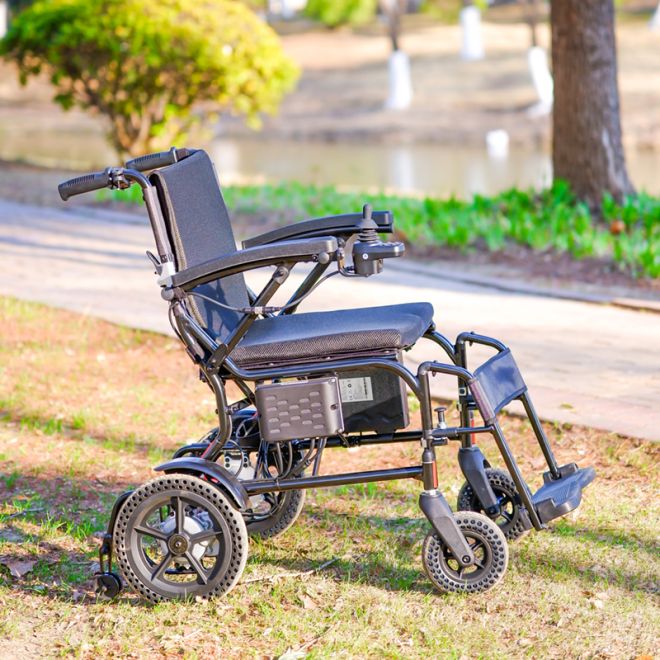
Models like the EXC-2026 B2B Wholesale Lightweight Foldable Electric Wheelchair - 18kg Magnesium Alloy, CE/ISO Certified and the compact Lightweight Foldable Electric Wheelchair EXC-2003 - Portable Motorized Wheelchair for Resale show how foldable powered designs can cut transport, storage, and service costs over time.
🔧 Hidden costs: maintenance, repairs, and battery replacement over the years
Sticker price is only the start. Budget also for yearly service, tire wear, electronics, and battery packs that slowly lose capacity.
Planning these costs early helps you avoid sudden, stressful repair bills later.
1. Routine maintenance and wear parts
Regular checks keep your chair safe and extend battery and motor life. Small, planned services can prevent expensive failures.
- Annual safety checks
- Tire and brake replacement
- Cleaning connectors and frames
2. Battery life cycles and replacement timing
Most lithium batteries last 2–5 years, depending on charge habits and daily distance. Good charging routines delay costly replacements.
| Use pattern | Expected battery life |
|---|---|
| Light (few km daily) | 4–5 years |
| Moderate | 3–4 years |
| Heavy, daily full drain | 2–3 years |
3. Electronics and structural repairs
Motor controllers, joysticks, and frame parts can fail, especially on rough ground. Strong design and quality control reduce these surprise costs.
- Choose certified electronics
- Avoid overloading the chair
- Fix small issues before they spread
🛡️ Warranties, service support, and why Excellent offers strong long‑term value
A clear warranty and easy access to parts often matter more than shaving a small amount off the purchase price.
Reliable service keeps your chair rolling and lowers the risk of long downtime.
1. Understanding warranty coverage details
Check what the warranty covers: frame, motor, controller, and battery may have different terms and lengths, often from one to several years.
- Ask about labor vs. parts coverage
- Check return or on‑site service options
2. Service networks and spare parts access
A brand that stocks parts and offers responsive support can cut repair times from months to days, keeping you safer and more independent.
| Factor | Impact |
|---|---|
| Local stock | Faster repairs |
| Clear manuals | Easier basic fixes |
| Tech support | Better problem solving |
3. Why Excellent’s designs reduce your lifetime cost
Excellent’s Lightweight Foldable Electric Wheelchair line focuses on low weight, foldable frames, tested electronics, and certified batteries, which all help lower service needs and transport costs over many years.
💡 Cost-saving tips, funding options, and choosing Excellent for reliable performance
You can control wheelchair power assist cost by comparing total ownership price, exploring funding, and selecting durable, easy‑service models.
Small planning steps can protect comfort, safety, and your budget.
1. Smart shopping and negotiation tips
Compare written quotes, ask for bulk or clinic discounts, and check if older model years offer the same features at lower prices.
- List must‑have vs. nice‑to‑have features
- Test drive if possible
- Ask about demo or showroom units
2. Insurance, grants, and community funding
Some users can combine insurance, disability grants, and charity programs to reduce or even fully cover power assist equipment costs.
| Source | Typical Help |
|---|---|
| Health insurance | Partial funding with medical proof |
| Government schemes | Subsidies or tax relief |
| Non‑profits | Targeted grants |
3. Why many buyers choose Excellent
Excellent blends light frames, foldable designs, and certified quality at competitive prices, helping you get solid performance without overpaying for unused features.
- Balanced price and durability
- Good fit for resale or fleet use
- Strong focus on daily practicality
Conclusion
Wheelchair power assist price should always be viewed over the full life of the chair, not only at checkout. Look at maintenance, batteries, transport, and caregiver time when you compare options.
By choosing certified, lightweight designs with solid support, you can gain independence, protect your health, and keep total long‑term costs under control.
Frequently Asked Questions about power attachment for wheelchair
1. How much does a wheelchair power assist usually cost?
Most power assist units fall between the mid hundreds and several thousand dollars, depending on range, weight, and control features. Premium models cost more but can last longer and reduce caregiver needs.
2. Can I add power assist to my existing manual wheelchair?
Many systems can attach to standard manual frames, but not all chairs fit every kit. Check frame type, wheel size, and weight limits, and ask the supplier for a compatibility check before buying.
3. How often will I need to replace the battery?
With good charging habits, expect a main battery to last 2–5 years. Heavy, daily use and deep discharges shorten life. Light use with regular, gentle charging can extend it significantly.
4. Are power assist devices covered by insurance or funding?
In many regions, funding is possible when a clinician confirms medical need. Talk with your therapist, doctor, or supplier, and ask your insurer about paperwork and approved models.
5. Is a full power wheelchair always better than power assist?
Not always. Power assist keeps the feel and size of a manual chair while adding help on hills and longer routes. Full power chairs suit higher support needs but cost more and are harder to transport.



Building A, Software park,Shuyang City,Suqian,Jiangsu, China

